
Your Complete Guide to Protein Bars
Beef tallow, hydrolyzed collagen protein, sorbitol, oh my! If simply setting foot in the protein bar aisle makes you feel overwhelmed, you’re not alone. I’m breaking down exactly what to look for (and what to avoid), so you can navigate the wild world of protein bars with confidence.
What to Look for and What to Avoid: The Quick and Dirty
Look for:
At least 10g of protein
A maximum of 3g of saturated fat
At least 5g of fiber
A maximum of 5g of added sugar
Under 300 calories
Avoid:
Over-engineered protein blends
Unnecessary saturated fat
Isolated/synthetic fiber*
Sugar alcohols*
*only if you’re sensitive (more on that later)
Protein
Let’s start with protein, since, well, it is a protein bar after all.
What to Look For
Choose a protein bar with at least 10 grams of protein, ideally more.
This is important because protein (along with fiber and fat) helps you feel satisfied and stay fuller for longer. Generally, protein bars with less than 10g of protein tend to be very high in sugar. The result? A snack that spikes your blood sugar and leaves you feeling tired and hungry an hour later. Choosing a high protein bar ensures that it is a balanced snack, and not just a sugar bomb masquerading as a health food.
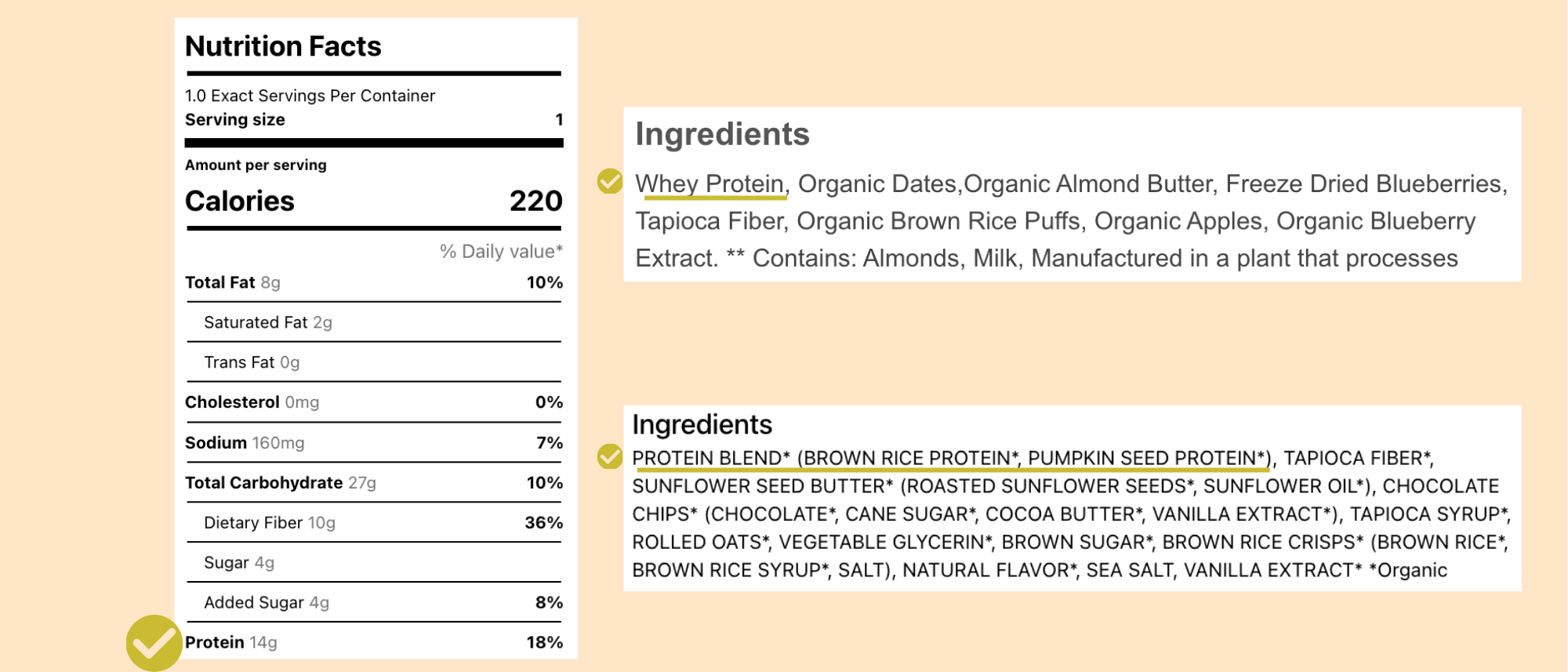
Choose a bar with at least 10g of protein, and a simple protein formulation.
What to Avoid
Overly complicated protein blends. Some protein bars include 4, 5, 6+ different types of protein in just one bar!
Example: hydrolyzed collagen + calcium caseinate + whey protein isolate + micellar casein isolate + milk protein concentrate + soy protein isolate + whole milk powder
While this isn’t harmful, it is totally unnecessary and really drives up the cost of these bars, which are already pretty pricey to begin with.
If a bar uses whey protein as its primary protein, whey protein concentrate alone will do the job juuuuuust fine. Whey protein is already a complete, high-quality protein. There is absolutely no need to add more into the mix, especially a protein source like collagen, which is not a complete protein because it lacks tryptophan. You likely get enough tryptophan from other foods, so this isn’t a huge deal. But we don’t even know if collagen is uniquely beneficial, and even if it is, you likely aren’t getting enough in a protein bar blend to move the needle.
Lactose intolerant? Whey and casein proteins are generally safe, but avoid whole and skim milk powders.
Plant-based bars, on the other hand, may blend 2-3 different plant-based proteins to form a complete protein.
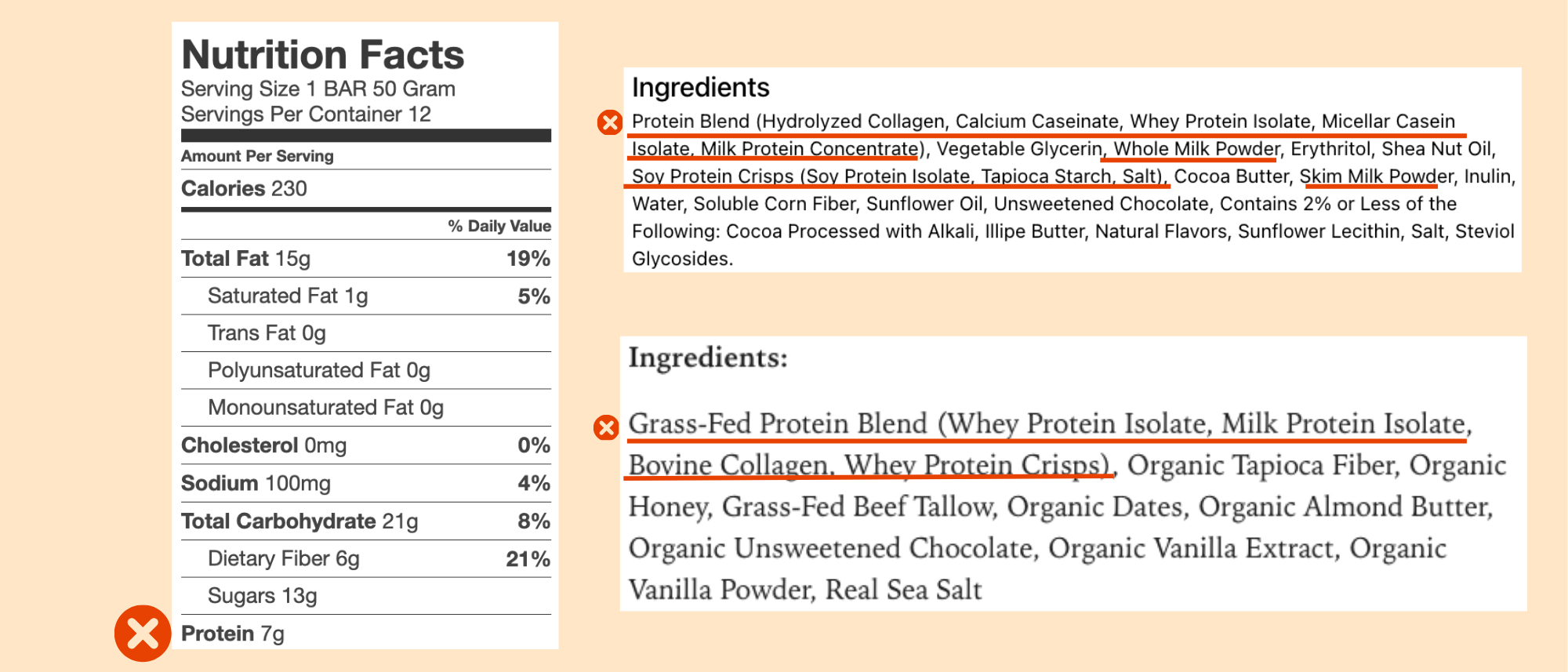
Avoid bars with fewer than 10g of protein, and over-engineered protein blends.
Fat
Protein bar companies are getting…creative with fat sources.
What to Look For
A maximum of 3 grams of saturated fat.
Protein bars usually have a fat to bind ingredients and keep the texture soft. Opt for a bar that uses unsaturated fat, like a nut or seed butter, for a dose of healthy fats.
P.S. The American Heart Association recommends keeping saturated fat under 6% of total calories. That’s 13g for a 2,000 calorie diet.
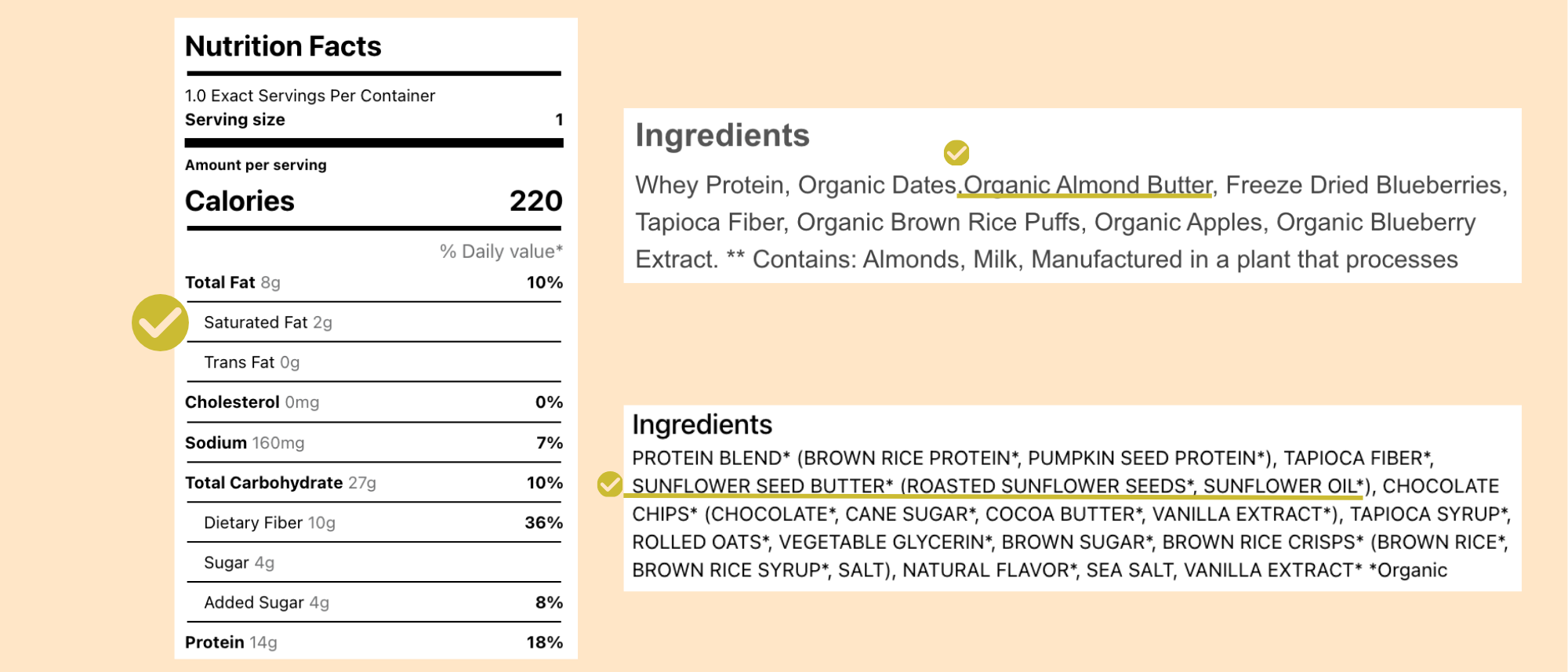
Choose a bar with 3g (or less) of saturated fat that uses unsaturated fats from nuts, seeds, and oils.
What to Avoid
Unnecessary use of saturated fats.
Examples: beef tallow, butter, coconut oil, palm kernel oil
Despite what MAHA and wellness grifters would like you to believe, limiting saturated fat intake is an evidence-based way to reduce your risk of heart disease.
Some bars can pack in 7g of saturated fat, over half of the American Heart Association’s recommended daily limit for saturated fat.
Heart disease is the number one killer of adult women in the US, so heart health should be a top priority for every single woman. Women with PMOS/PCOS and post-menopausal women in particular are at an increased risk of high cholesterol and cardiovascular disease, and reducing saturated fat intake is one of the most effective ways to reduce cholesterol levels.
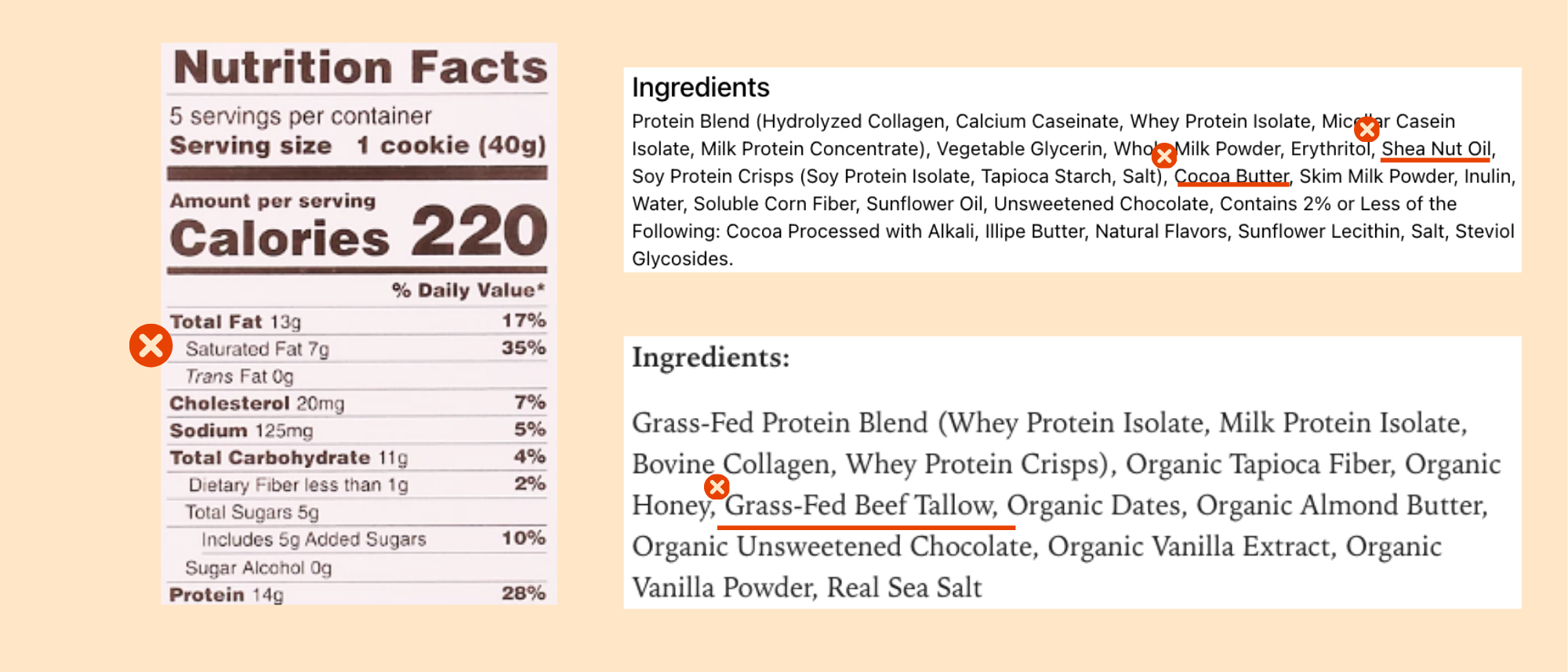
Avoid protein bars that have more than 3g of saturated fat, and/or utilize saturated fats like tallow, cocoa butter, shea nut butter, and coconut oil over unsaturated fat sources.
Fiber
A protein bar is a great opportunity to get in some of your daily fiber needs, but not all fiber sources are created equal.
What to Look For
At least 5 grams of fiber, ideally more.
Together with protein, fiber helps keep you full. It also smooths blood sugar spikes, and is hugely beneficial in managing insulin resistance commonly seen in PCOS/PMOS and post-menopause.
Most Americans don’t meet their fiber needs, which is 14 grams per 1000 calories. Choosing a fiber-rich bar can help sneak extra fiber into your diet. Bonus points if the fiber comes from whole-food sources like seeds, nuts, and fruit.
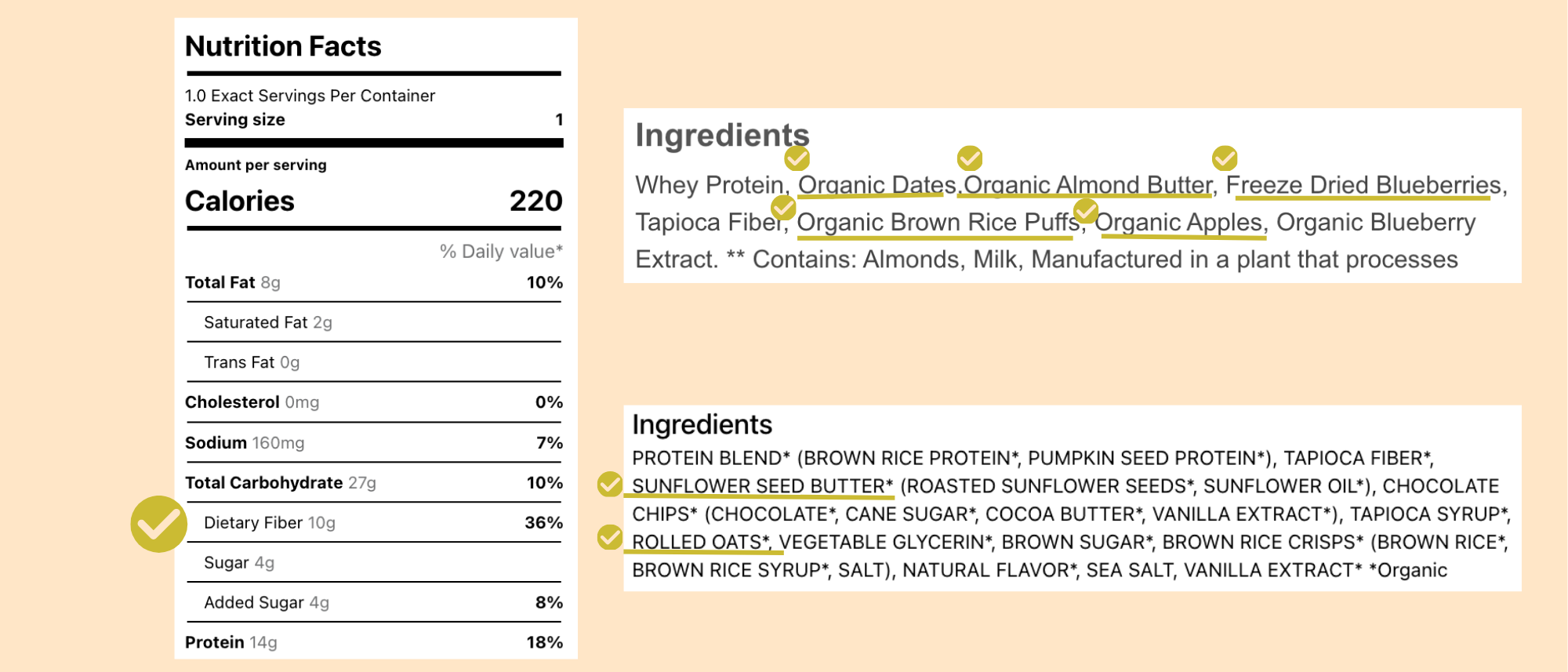
Look for a bar with at least 10g of fiber, and whole food sources of fiber.
What to (maybe) Avoid
Isolated or synthetic fiber, if sensitive.
Examples: chicory root fiber, inulin, isomalto-oigosaccharides (IMO), tapioca fiber, soluble corn fiber
Getting fiber from whole food forms maximizes its benefits. It also reduces the risk of bloating, gassiness, diarrhea, and abdominal cramping that can happen when isolated fiber is rapidly fermented in the colon.
No issues? Then they are a great way to increase your fiber intake! But think of this as “bonus fiber” and still aim to get plenty of fiber from whole foods, too.
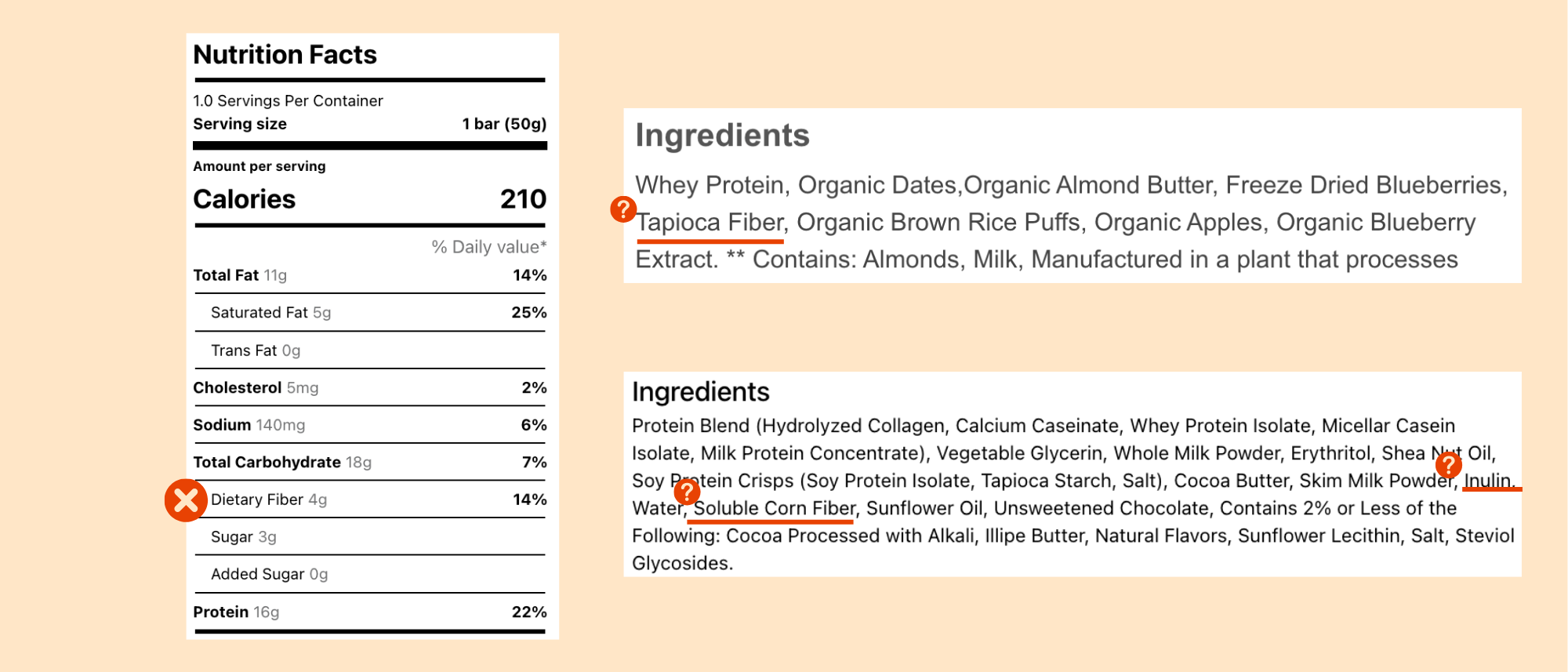
Avoid bars with less than 5g of fiber. Avoid isolated/synthetic fibers only if you’re sensitive.
Sugar
Some protein bars look more like a candy bar more than a midday snack. But read on before you go for the bars that advertise low sugar, or you might find out why to avoid them the hard way.
What to Look For
Under 5 grams of added sugar.
High sugar content, especially added sugar, drives up calories without providing nutritional value. Sources of added sugar should be in the middle or end of the ingredient list, indicating that they are added in smaller amounts.
Even if added sugar is low, keep an eye on total sugar, too. Fruit like dates don’t count toward “added sugar,” but can really increase the sugar content. With enough protein (10g+) and fiber (5g+), sugar from whole fruit is fine. But if not? That’s a sign the bar isn’t a balanced snack.
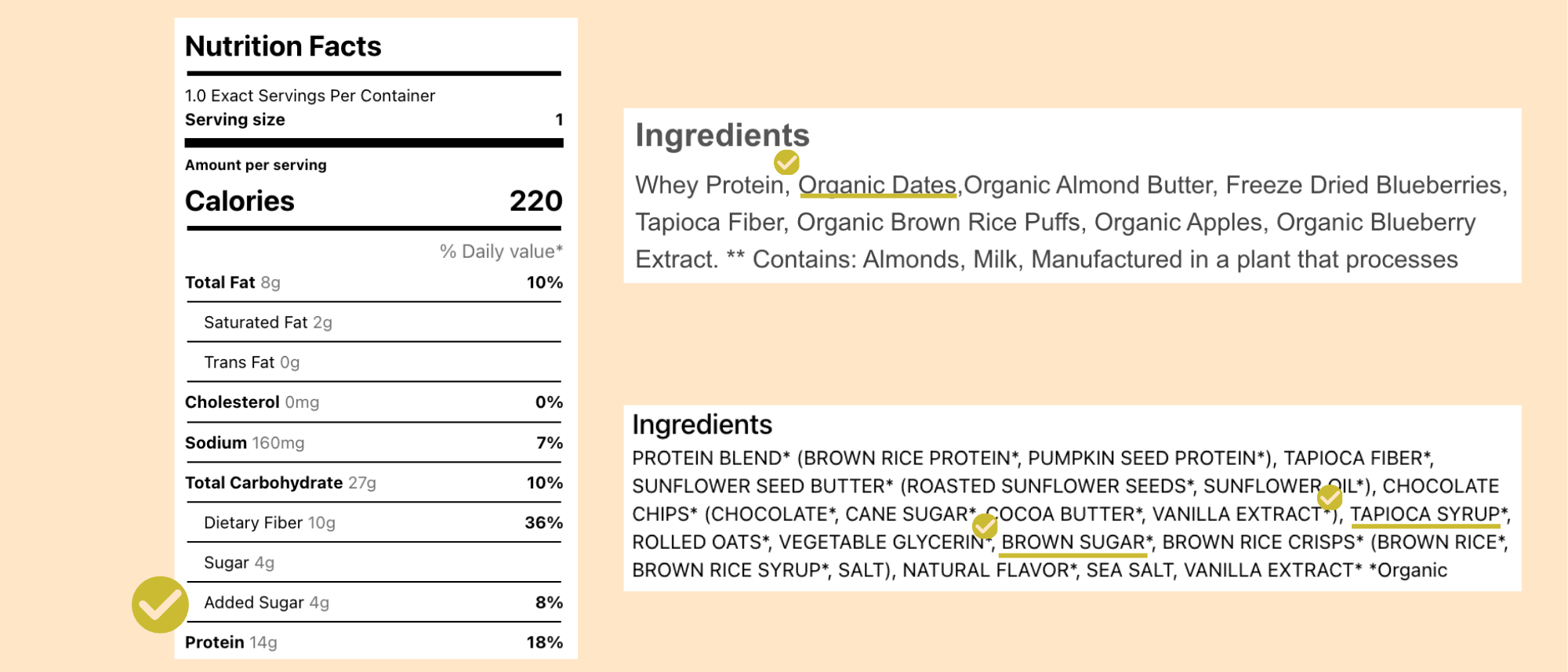
Look for bars that keep added sugar under 4g, and that sources of added sugar are in the middle or end of the ingredient list.
What to (maybe) Avoid
Sugar alcohols, which are common in bars that advertise very low sugar (e.g. “1 gram of sugar”). Sugar alcohols are identifiable by the -ol ending.
Examples: sorbitol, erythriol, mannitol, maltitol, xylitol
These very low calorie sweeteners are fermented in the colon, which commonly causes bloating, gas, pain, and diarrhea. If you do tolerate them, they’re fine to eat.
Unlike sugar substitutes like aspartame, sugar alcohols can slightly raise blood sugar.
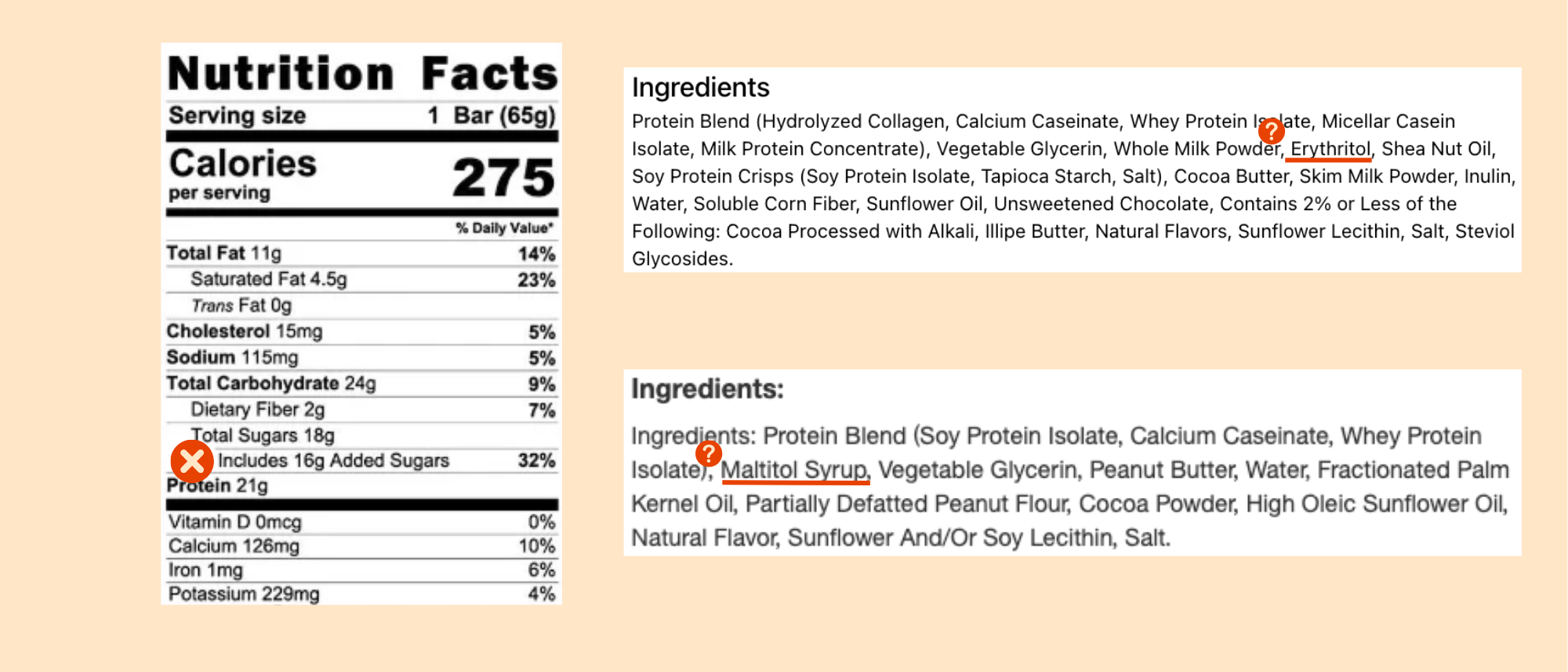
Avoid protein bars with over 5g of added sugar, and sugar alcohols (if sensitive).
Now you’re ready to go forth and conquer the protein bar aisle! Questions or comments? I’d love to hear below!
